ServicesOverhead Doors
Overhead Door Repair and Replacement in Kingston
We repair and replace the sectional and rolling overhead doors on your loading dock, from broken torsion springs and frayed cables to dented panels and failed seals. We also explain which steel, aluminum or insulated door suits each opening, so the fix matches how hard that dock works.
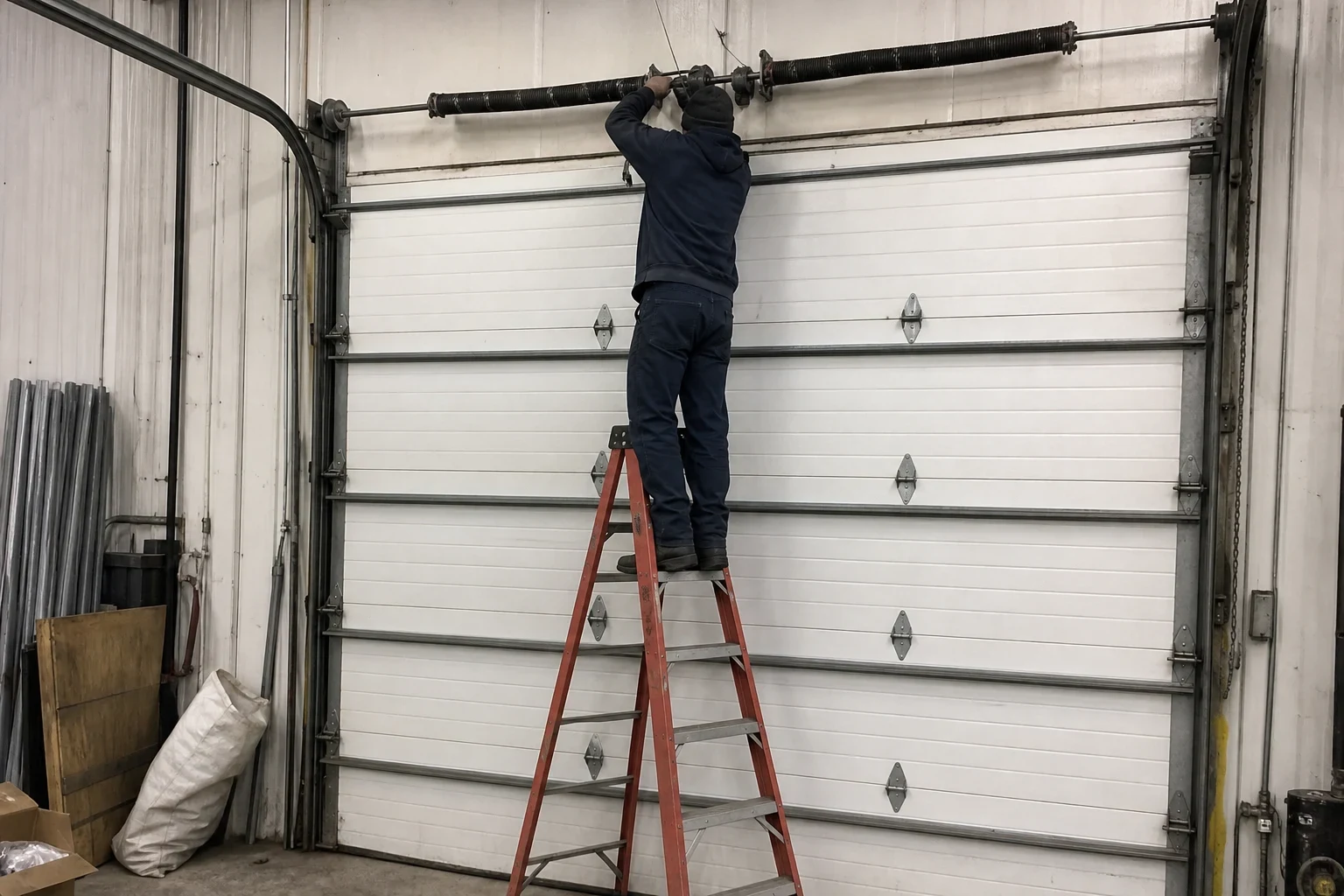
A door built for the traffic it actually sees
A dock overhead door cycles many times a shift, takes hits from pallet jacks and forklifts, and seals the building against wind and cold. When one part wears out, the load shifts to the rest. A tired spring strains the operator, a bent track chews up rollers, and a torn bottom seal lets in water that rusts the lower section from the inside.
We start by finding the cause, not only the broken part. Then we tell you plainly whether a repair will hold or whether the door has reached the point where a new one costs less over time. If replacement makes sense, we walk you through the material choices: 24-gauge steel versus lighter 26-gauge, polystyrene versus polyurethane insulation, and when an aluminum full-view door or a rolling steel door is the better fit.
We work at warehouses, distribution centers, grocery and retail receiving docks, and plants in Kingston, Wilkes-Barre, Plymouth and the surrounding area.
What our overhead door service covers
- Torsion springs and lift cables
- We replace broken springs in matched pairs and size them to the actual door weight. On high-traffic docks we can fit high-cycle springs rated for far more open-close cycles than standard ones, which cuts how often you face this repair.
- Panels and sections
- Dented or rusted sections are replaced to match the existing panel profile, gauge and insulation where parts are available. We add or replace struts on wide doors so the sections stop bowing under their own weight.
- Tracks, rollers and hinges
- Track that has taken a forklift hit gets trued up or swapped out. Worn rollers come out in favor of sealed-bearing nylon or steel wheels matched to how often the door cycles, and cracked hinges are replaced at the same time. Once everything lines up again, the door stops binding and stays in its track.
- Seals and weatherstripping
- Bottom seals, jamb seals and header seals wear out fastest. Fresh seals keep out rain, snowmelt and drafts, and protect the bottom section from corrosion.
- Operators and safety devices
- Jackshaft and trolley operators get checked and repaired, along with photo eyes and reversing edges. We reset the open and close limits so the door halts at the right height and backs off an obstruction on contact.
- Complete door replacement
- When a door is beyond repair, we remove it and install a new sectional or rolling steel door, matched to the opening, the insulation you need and the abuse it will take.
Signs your dock door needs attention
The door feels heavy or lifts unevenly
A door that drifts down when released halfway, or rises crooked, usually points to a weak spring or a stretched cable. Running it that way overloads the operator.
Loud grinding or popping
Grinding often means dry or failing rollers and bearings. A sharp bang followed by a door that will not lift is typically a broken spring, and the door should stay closed until it is fixed.
Daylight around the edges
Light under the bottom or along the jambs means worn seals or a section that no longer sits flat. In a Kingston winter that gap becomes heat loss and ice at the threshold.
Dented or bowed sections
An impact can kink a panel enough to bind in the track. Bowing across the width suggests missing or weak struts.
Frayed cables or rust at the bottom
Frayed lift cables can let go without warning. Rust along the bottom section usually starts where water sits against a failed seal.
How a door repair visit runs
- 1
Start with a phone call
Give us the door type, a rough opening size and the symptoms you are seeing. We also want to know how busy that dock gets and which openings can come out of service, so the visit fits around your receiving schedule.
- 2
On-site inspection
We go through the springs, cables, drums, tracks, rollers, sections, seals and operator one by one, photographing any wear or damage. Your written estimate then breaks out every part and the labor separately.
- 3
Repair or replacement
We secure the door, release spring tension safely and work one opening at a time so the rest of your docks keep moving. Debris and old parts leave with us.
- 4
Balance and safety test
We balance the springs, set the operator limits, test the photo eyes and reversing edge, and cycle the door several times before handing it back.
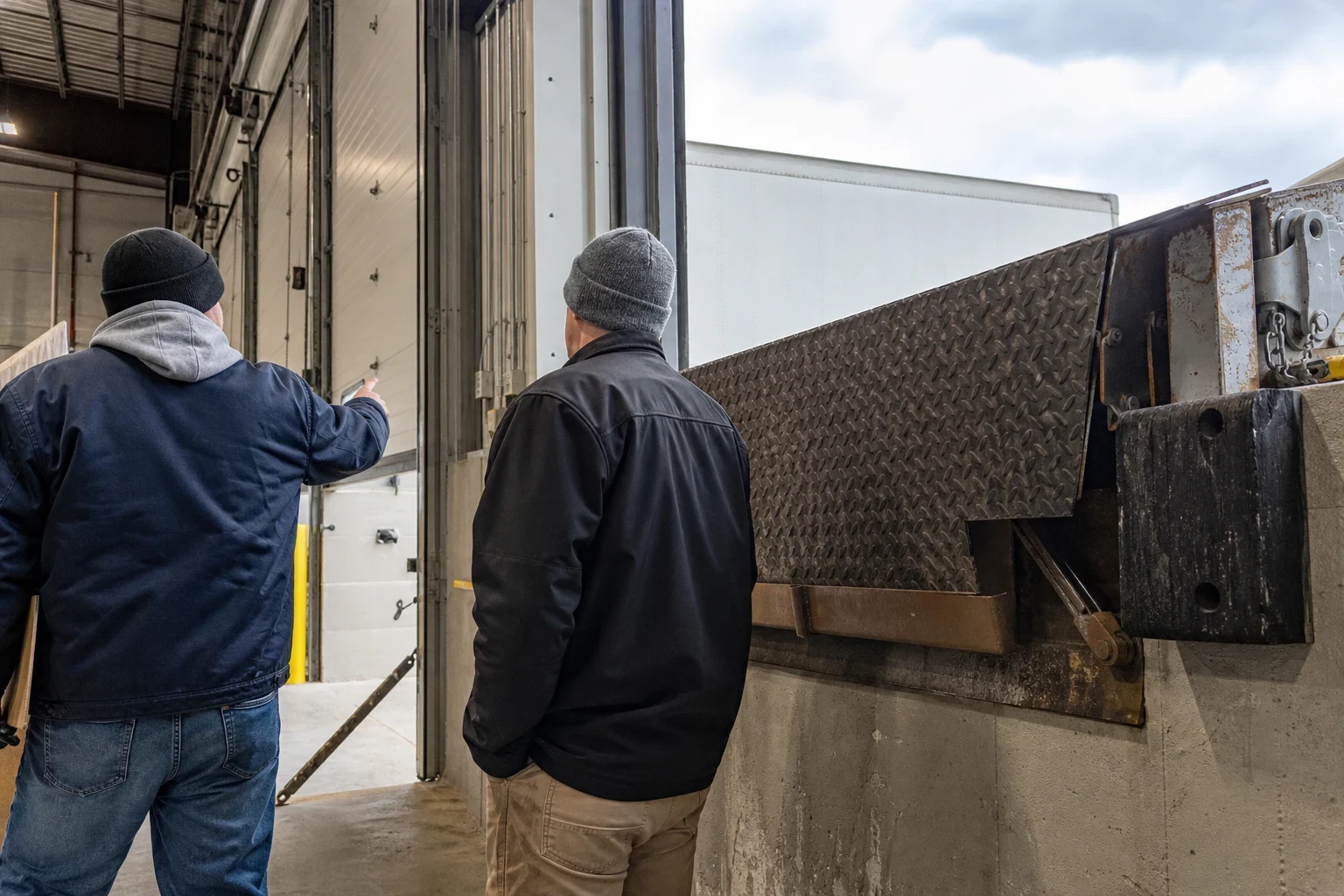
What affects the cost of overhead door work
Most door repairs are priced by the parts involved and the time to do the job safely. Replacement depends heavily on the door you choose. We itemize the estimate so you can see where the money goes before any work starts.
- Opening size and door weight
- A wide or tall door carries more mass, so it calls for heavier-wire springs, thicker cables and sometimes a second technician on the lift. Insulation adds weight too, which changes the spring calculation.
- Material and insulation
- Uninsulated 26-gauge steel costs least. Heavier 24-gauge steel, polyurethane insulation and aluminum full-view sections cost more but resist dents better or hold heat better.
- Spring cycle rating
- High-cycle springs cost more up front and last much longer on a busy dock, so they often cost less per year of use.
- Extent of damage
- A single section or seal is a modest repair. Bent track, damaged headers or several struck sections add parts and labor.
Overhead door questions
Something not covered here? (570) 608-8454
Should I repair my damaged door or replace it?
If the damage is limited to one or two sections, springs or seals, repair usually makes sense. When several sections are bent, the panels are rusting through, or replacement parts for that model are hard to find, a new door is often the better value. We show you photos and give you both options in writing.
Is insulated steel worth it on a loading dock?
For heated warehouses, cold storage and grocery receiving, yes. Polyurethane-insulated doors hold heat better than polystyrene and add stiffness, so they shrug off minor bumps. For unheated storage, a heavier uninsulated steel door may be all you need.
Can you work on rolling steel doors as well as sectional doors?
Yes. We repair and replace both. Rolling steel doors suit tight headroom, while sectional doors usually seal and insulate better. For security over storefronts or counters, see our rolling grilles page.
Will the repair shut down my dock?
Only the opening we are working on is out of use. Most spring, cable and seal repairs are wrapped up in a single visit when the parts are on hand, and we schedule around your receiving windows when we can.
Do you also service the dock leveler and seals at the same door?
Yes. Many visits combine door work with dock levelers or vehicle restraints, and a preventative maintenance plan covers all of it on a set schedule.
Get your dock door working right
Tell us what the door is doing and we will explain the repair, the material options and what it will take. Doors in Kingston, Forty Fort, Luzerne and nearby are on our regular routes.