ServicesEquipment Installation
Loading Dock Equipment Installation in Kingston
We install dock levelers, vehicle restraints, seals, bumpers and doors at warehouses and receiving docks. Before anything is ordered, we measure the pit, check the concrete and embedded steel, and confirm your power supply, so the new equipment fits your trailers and runs on your first shift back.
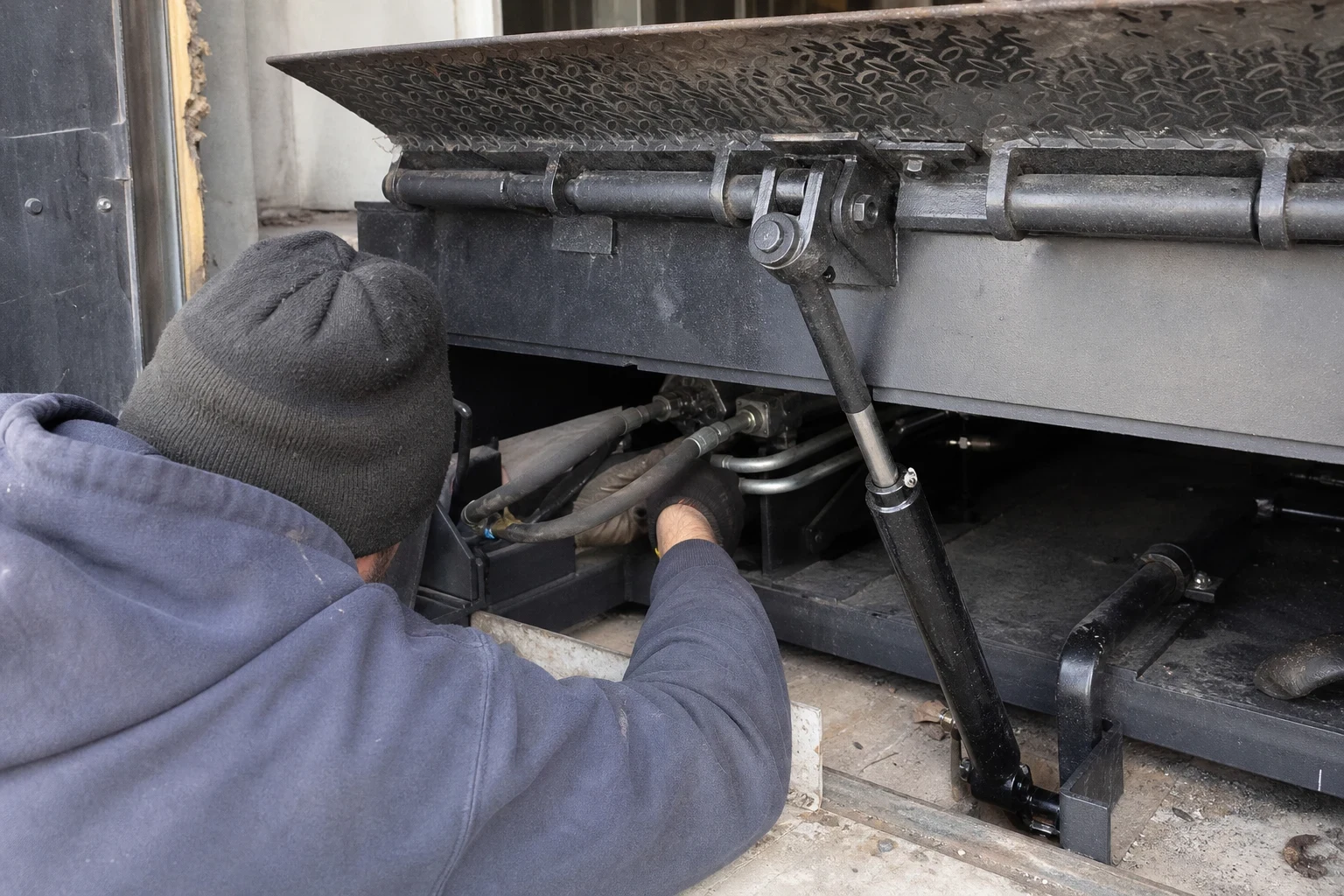
What a Proper Dock Installation Involves
Installing dock equipment is mostly about what sits underneath it. A new hydraulic leveler dropped into a pit with a cracked curb angle or a sloped floor will rack, bind and wear its hinge pins early. So we start with the pit, the embedded steel and the approach, then match the equipment to them.
Material choice matters as much as model choice. We explain the trade-offs in plain terms: hydraulic against mechanical levelers, foam seals against fabric shelters, laminated rubber against steel-faced bumpers, and which fits your trailer heights, forklift weights and shift count. Facilities from Wilkes-Barre to Plymouth run very different loads, and the right answer for a grocery dock is rarely the right one for a steel fabricator.
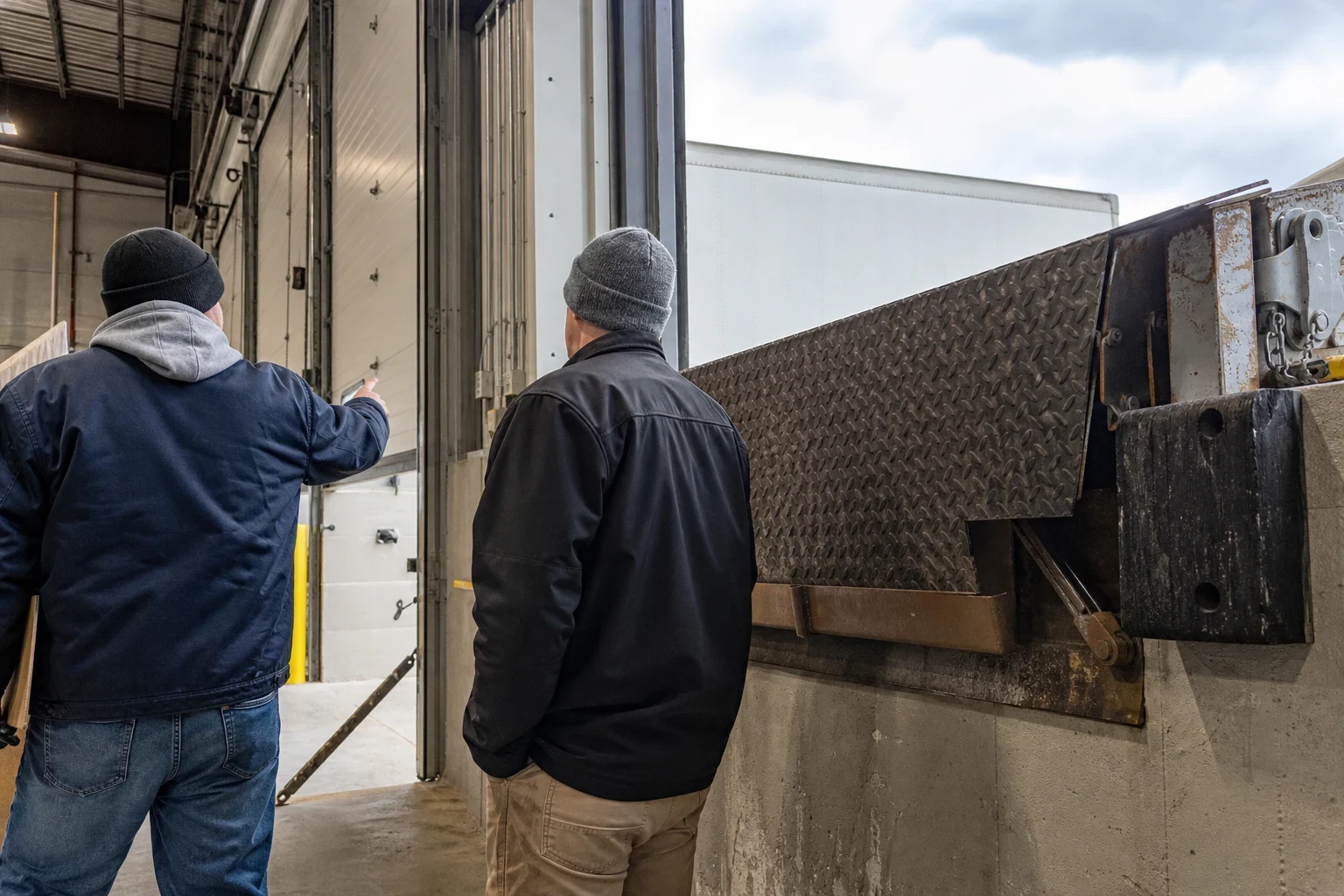
What We Install
- 01
Pit-style and edge-of-dock levelers
We set hydraulic, mechanical and air-powered levelers, shimmed level and welded to the curb angle. We size the deck length to your trailer height range so the incline stays manageable for loaded forklifts.
- 02
Vehicle restraints
Rotating-hook restraints that grab the trailer's rear impact guard, or wheel-based units for trailers with damaged or missing guards. Each one is wired to inside and outside communication lights so drivers and dock staff see the same signal.
- 03
Dock seals and shelters
Foam-core seals with heavy vinyl covers seal tight but wear where trailers rub. Fabric shelters with flexible side frames handle mixed trailer widths and suit high-volume docks better. We help you pick by traffic, not by catalog page.
- 04
Bumpers and trailer guides
Laminated rubber bumpers absorb impact at a lower cost. Steel-faced bumpers last far longer at busy docks where trailers drag down as they load. We anchor them into sound concrete, not spalled edges.
- 05
Doors and controls
We install insulated sectional overhead doors, high speed doors and rolling grilles, plus interlocks that keep the leveler from operating until the door is open and the restraint is engaged.
Questions about Equipment Installation?
Call(570) 608-8454Signs It Is Time for New Dock Equipment
Repairs keep repeating
When the same leveler needs a new hydraulic cylinder, lip hinge or hold-down every year, the deck structure is often fatigued. Replacing it usually costs less than another season of downtime.
Trailers no longer fit the dock
Air-ride trailers, reefers and low-deck units sit at heights your old leveler was never sized for. Steep inclines and bottomed-out lips slow loading and strain forklift masts.
Trailer creep or early departure
If a trailer has pulled away or crept from the dock while a forklift was inside, a vehicle restraint belongs at the top of your safety list.
Torn seals and heat loss
Shredded seal covers and gaps around trailers let in cold air, snow and road salt through a Kingston winter, which shows up on heating bills and wet floors.
Adding or reconfiguring docks
New doors, a building expansion or a change in tenant use all call for equipment planned around the new traffic.
How an Installation Runs
- 1
Site survey
We measure pit width, depth and length, check the curb angle and concrete for cracking, and confirm voltage and phase at the panel. We photograph what we find and walk you through it.
- 2
Equipment and material selection
We talk through the options with you by phone and follow up with a written, line-item quote that sets them side by side. Each line notes what the material trade-off means for service life and upkeep.
- 3
Scheduled install
We book the work around your receiving hours. Usually only the door we are working on is closed, and the neighboring positions stay open for trucks. Pit repairs, welding and anchoring are finished before the new unit goes in.
- 4
Testing and handoff
We cycle the leveler, restraint and door through full travel, check interlocks and lights, clean up, and show your dock staff how the controls and safety stops work.
What Drives Installation Pricing
The equipment itself is only one line on the quote. Pit condition and the electrical service available at each door often swing the total more than the model you pick. We review each factor with you before anything is scheduled, so the figure you approve matches the scope we agreed on.
- Equipment type and capacity
- A mechanical leveler costs less up front than hydraulic, but hydraulic units need less adjustment over time. Capacity rating and deck length also change the price.
- Pit and concrete condition
- Cracked curb angles, broken pit walls or an out-of-level pit floor must be repaired first. That work is invisible later but decides how long the leveler lasts.
- Electrical work
- Hydraulic levelers, restraints and high speed doors need power and control wiring. Long runs or a panel without spare capacity add labor.
- Number of doors and access
- Doing several positions in one visit spreads setup and mobilization. Tight yards or occupied docks that must stay running take more scheduling.
Installation Questions
How long does one dock position take to install?
A leveler swap into a sound pit is often a single working day for that door. Pit repairs, new electrical or a full package with restraint, seal and door take longer. We give you the timeline at the survey so you can plan receiving around it.
Should we choose a hydraulic or mechanical leveler?
Mechanical levelers cost less to buy and work without power, but their springs and hold-downs need regular adjustment. Hydraulic units run with a push button, handle heavy traffic better and need less hands-on tuning. For multi-shift docks we usually lean hydraulic; for light, occasional use, mechanical can make sense.
Can a new leveler go into our existing pit?
Usually, if the pit dimensions match a standard size and the concrete and curb steel are sound. If the pit is damaged or an odd size, we explain the repair or the retrofit options before anything is ordered.
Will the rest of our dock keep running during the work?
In most cases, yes. We barricade the position we are on and keep our tools and equipment clear of your forklift lanes.
Do you install equipment from our Loading Dock Equipment Sales order?
Yes. When you buy through us, the survey, selection and install are one plan. If you already own equipment, we can look at it and the pit it is going into and tell you honestly whether it is a good fit.
Get Your Dock Installation Planned
Tell us how many doors, what trailers you receive and what is failing now. We will set up a site survey and lay out your material options by phone before anything is ordered.