ServicesHigh Speed Doors
High Speed Doors in Kingston
We install and repair high speed doors for warehouses, cold rooms and busy interior openings. Before anything is ordered, we explain the real difference between a flexible fabric curtain and a rigid insulated door, so the one you buy fits your forklift traffic and your temperature zone.
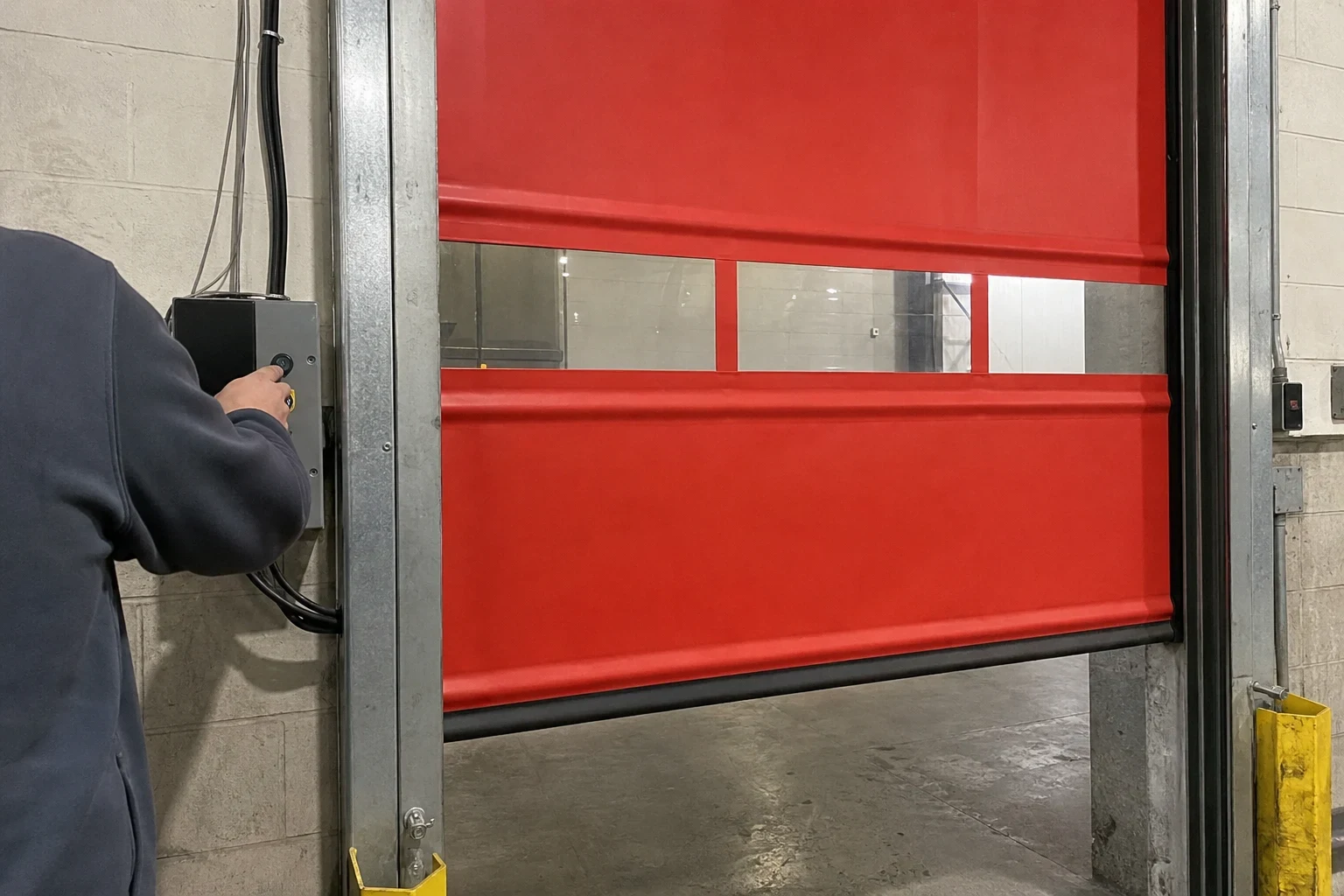
What a High Speed Door Does Better
Where a standard sectional overhead door creeps up and down, a high speed door covers the same travel in a fraction of the time. It also has no counterbalance springs, so it can run hundreds of cycles in a single shift without eating through hardware. The payoff is biggest at openings with constant forklift traffic, at rooms where conditioned air pours out whenever the door is up, and at doorways where a slow panel leaves equipment idling in line.
The material decision drives almost everything else. Flexible doors use a PVC-coated polyester curtain that rolls onto a drum. Many have a breakaway or self-repairing bottom edge, so a forklift strike pops the curtain out of its guides instead of bending steel. Rigid high speed doors use aluminum or insulated slats that spiral or roll up. They hold up better against wind and offer more security and insulating value, but they cost more and need real repair after an impact.
For a freezer or cooler, the curtain or slats must be insulated and the side guides are often heated so frost does not lock the door. Through a long northeastern Pennsylvania winter, that detail decides whether a door keeps running or freezes shut at the start of first shift.
What Our High Speed Door Work Covers
Opening and traffic review
We measure the opening, check the header and jamb condition, and ask how many cycles a shift the door sees. Traffic volume and impact risk point toward fabric or rigid.
Curtain and panel selection
We compare PVC-coated fabric, clear vision panels, insulated curtains and rigid aluminum slats side by side. You hear what each one handles well and where it falls short.
Drive, motor and controls
We install the motor, the variable frequency drive that gives soft starts and stops, and the control panel. Encoder limits are set so the door stops at the same height every cycle.
Activation devices
Radar motion sensors, floor loops, pull cords or push buttons are placed to match how your traffic approaches. A well-aimed sensor keeps the door from opening for every person who walks past.
Safety devices
Photo eyes, light curtains and reversing edges are mounted, wired and tested before we leave. These stop the door from closing on a person or a pallet.
Repairs on existing doors
We replace torn curtains, reset breakaway bottoms, and troubleshoot drives, sensors and encoders on doors already in service.
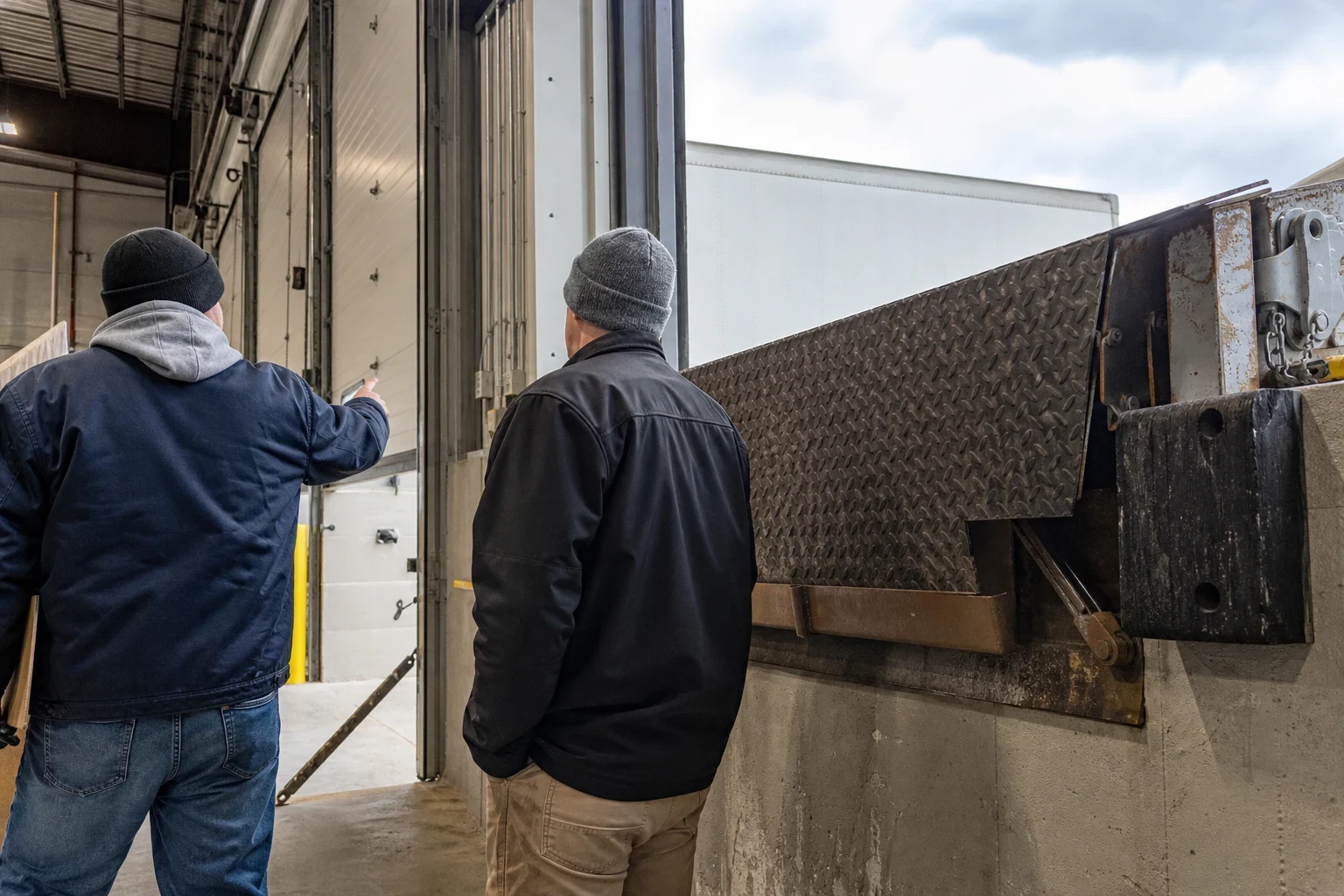
Signs Your Opening Needs a High Speed Door
- Springs on a sectional door keep failing
- Torsion springs are rated for a set number of cycles. A busy interior opening can use those up quickly, and a high speed door has no springs to wear out.
- Frost or condensation at a cold room
- Ice on the floor or frost along the jamb means warm, humid air is getting in every time the door is up. A faster, insulated door shortens that open time.
- The curtain keeps leaving its guides
- Repeated derailments point to worn guides, a damaged bottom bar or a curtain that is the wrong type for the traffic. Sometimes the fix is a repair. Sometimes it is a different material.
- Forklifts wait at the door
- If drivers stop and wait for a slow door, you are losing time on every trip. They may also start clipping it out of impatience.
- The door opens for no reason
- Phantom openings waste energy and wear the motor. Usually the cause is a misaimed radar sensor or a faulty floor loop.
How a High Speed Door Job Runs
- 1
Site visit
We look at the opening, the power available and the traffic pattern, and take measurements. We also note anything in the header area, such as sprinkler lines or ductwork, that affects mounting.
- 2
Material recommendation and quote
You get a written quote that names the curtain or panel material, the drive, and every activation and safety device. If a repair makes more sense than a replacement, we tell you.
- 3
Installation day
We lock out power, remove the old door if there is one, mount the guides and head assembly, and run the control wiring. We schedule around your shifts where we can to keep downtime short.
- 4
Testing and handoff
We cycle the door repeatedly, set the limits, and test every photo eye and reversing edge. Then we walk your staff through the controls and what to do if the curtain breaks away.
What Moves the Price of a High Speed Door
Two doors that look alike can be priced very differently because of what is inside them. These are the factors that change a quote the most. We spell each one out on paper so nothing turns up later.
- Fabric versus rigid construction
- A single-ply PVC fabric curtain is the most economical. Insulated curtains, and rigid aluminum or insulated slat doors, cost more but add insulating value, wind resistance and security.
- Opening size
- Wider and taller openings need a larger drum, heavier guides and a stronger motor. Very wide exterior openings may also need wind bars or a rigid design.
- Temperature zone
- Freezer and cooler doors often need heated guides, insulated curtains and seals rated for low temperatures.
- Activation and safety package
- Light curtains, radar sensors, floor loops and interlocks with other dock equipment each add parts and wiring time.
- Electrical and structural prep
- If the opening lacks the right power supply, or the header needs reinforcing to carry the head assembly, that work is part of the job.
High Speed Door Questions
- Should I choose a fabric or a rigid high speed door?
- Fabric suits interior openings with heavy forklift traffic, because a breakaway curtain shrugs off most impacts. Rigid doors suit exterior openings and spaces that need security, insulation or wind resistance. We look at your opening and explain which trade-off matters more for you.
- What happens when a forklift hits a fabric door?
- On a breakaway design, the bottom of the curtain pulls out of the guides instead of tearing or bending. Many doors reset on the next cycle. Others need a quick manual reset that your staff can learn to do.
- Can a high speed door go on an exterior dock opening?
- Yes, but wind load becomes the main concern. Exterior doors usually need wind bars, a heavier curtain or rigid slats. For truck positions, a standard overhead door is often still the better fit, and we cover those on our Overhead Doors page.
- Do you repair high speed doors you did not install?
- Yes. We work on curtains, drives, encoders and sensors on existing doors. Some parts depend on the original manufacturer, so we confirm availability before we quote.
- How much maintenance do these doors need?
- Less than a spring-driven door, but the guides, curtain, seals and safety devices still need regular checks. You can include them in a loading dock preventative maintenance visit with the rest of your dock equipment.
Find the Right Door for Your Opening
Tell us the opening size, the traffic and the temperature on each side. We will explain which materials fit and what the job involves. We serve facilities in Kingston, Wilkes-Barre, Plains and nearby towns.