ServicesDock Levelers
Dock Leveler Repair and Replacement in Kingston
We repair and replace dock levelers for warehouses, distribution centers and receiving docks. We find out why the deck, lip or power unit is failing, explain what each fix involves, and tell you plainly whether a repair will hold or the leveler has reached the end of its service.
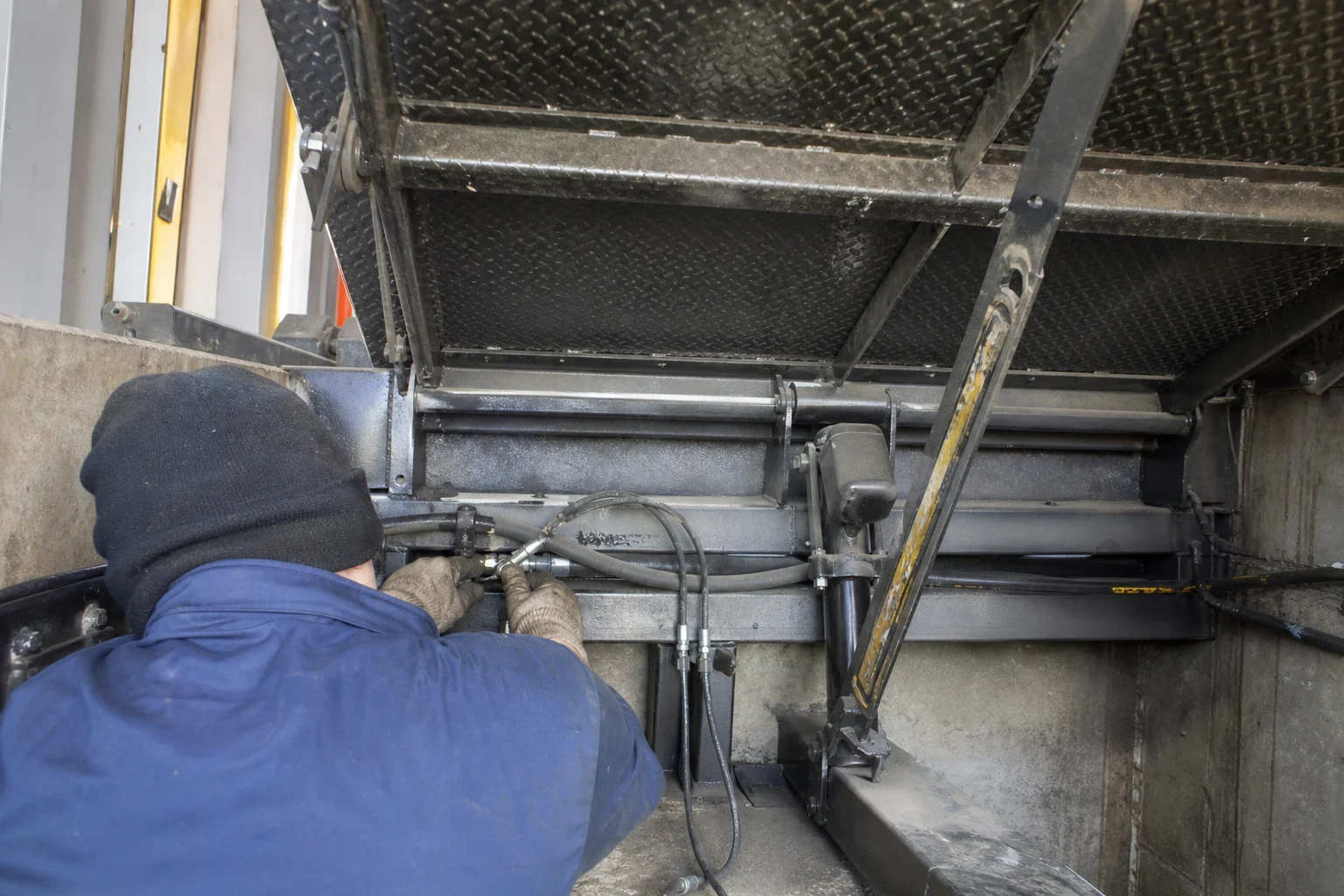
What a dock leveler does, and why it fails
Trailer beds rarely sit at the same height as your dock floor, and there is always some open space between the building and the truck. The leveler spans both so forklifts and pallet jacks can roll across without a step or a drop. It takes a hit every time a loaded lift truck crosses, so wear concentrates in a few places: the lip hinge, the rear hinge, the deck plate and whatever raises the deck.
How a leveler fails depends on how it is built. Mechanical levelers rely on a spring assembly and a hold-down mechanism, so they fail through stretched springs, worn ratchets and broken pull chains. Hydraulic levelers fail through leaking cylinders, cracked hoses and tired power units. Air-powered levelers use an inflatable bag and a blower, so a torn bag or a weak motor is the usual cause. Knowing which one you have tells us where to look first.
We work on all three types. If your leveler is beyond repair, we can explain the trade-offs between them before you choose a replacement, and our Loading Dock Equipment Installation page covers how a new unit goes in.
What our dock leveler work covers
- Lip and hinge repair
- Bent lips, worn lip hinge pins and cracked hinge tubes are the most common leveler damage. We straighten or replace the lip, re-pin the hinge and check that the lip extends fully and rests on the trailer bed instead of hanging short.
- Hydraulic system service
- We trace leaks to the cylinder, hose or fitting, replace seals and hoses, and check the power unit and fluid condition. We also confirm the velocity fuse works, since that valve is what catches the deck if a truck leaves while the leveler is still under load.
- Mechanical spring and hold-down repair
- On spring-operated levelers we replace fatigued lift springs, adjust tension, and repair the hold-down and release chain so the deck rises at a controlled speed and stays where it should.
- Air bag and blower replacement
- For air-powered levelers we replace torn or porous lift bags and worn blower motors, and check the deck for the binding that overworks both.
- Deck, pit and weld repair
- We repair cracked deck plate, broken welds on support beams and damaged curb angles at the pit edge, where forklift impacts and corrosion tend to start.
- Seals, toe guards and bumpers
- Worn weatherseals, missing toe guards and chewed-up dock bumpers get replaced, since each one affects safety, energy loss or how hard trailers hit the leveler.
Signs your dock leveler needs attention
The deck drifts down under load
A hydraulic deck that slowly sinks usually points to a leaking cylinder seal or a failing check valve. It also means the deck is not holding its working position.
The lip will not extend or stay out
A lip that sticks halfway or drops back is often a seized hinge, a bent lip plate or a weak lip cylinder. Crossing a short lip puts the full load on its edge.
Bouncing, banging or a hard drop
A deck that slams down or bounces when released on a mechanical leveler suggests worn springs or a damaged hold-down. On any leveler, an uncontrolled drop is a safety problem to address before the next shift.
Oil under the deck
Fluid in the pit means a hose, fitting or cylinder is leaking. Left alone, the power unit runs low and starts to cavitate.
Cracks at welds or curb angles
Fresh cracks along the deck plate, hinge tube or pit edge spread with every crossing. Winter salt tracked off trailers speeds up rust once the paint and steel are broken.
How a dock leveler repair runs
- 1
You describe the problem by phone
Tell us the leveler type if you know it, what it is doing and how many doors are affected. That helps us bring the likely parts and plan around your receiving schedule.
- 2
On-site inspection
We lock out power, raise the deck and set the safety prop before anyone goes into the pit. From there we check the lip, both hinges, the lift system, the welds and the pit itself. We show you what we found and explain the cause, not just the symptom.
- 3
Repair-or-replace answer
You get a written, line-item estimate. If the deck structure is badly fatigued or parts are no longer available, we will say so and walk you through mechanical, hydraulic and air-powered replacement options.
- 4
The repair and function test
Normally only the leveler under repair is taken out of service, and trucks keep backing into the neighboring positions while we work. Once the fix is done, we run the deck up and down through its full travel, check the lip and the fall protection, and clear debris out of the pit.
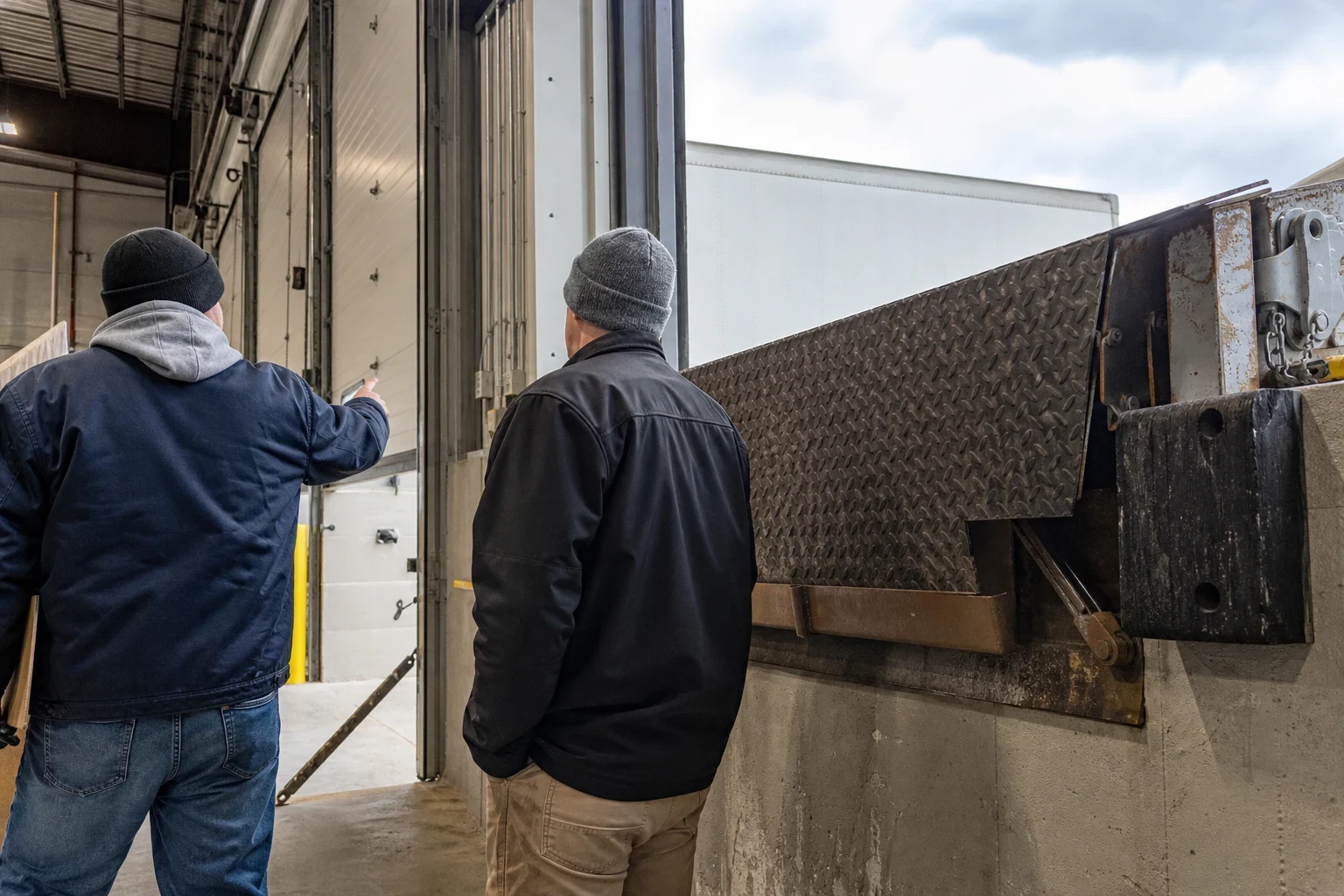
What moves the cost of dock leveler work
There is no flat price for leveler repair because the cause varies so much. A seized hinge pin and a cracked support beam can look similar from the dock floor. We price after inspecting the unit and give you the cost in writing before work starts.
- Leveler type and make
- Hydraulic parts such as cylinders and power units cost more than springs, while air bags fall in between. Older or discontinued models can need fabricated parts.
- Extent of structural damage
- Lip and hinge work is usually contained. Cracked deck plate or broken support beams mean cutting, welding and more labor.
- Pit condition
- A deteriorated concrete pit or damaged curb angles affect how a repaired or new leveler sits, and may need work before the leveler itself.
- Capacity and size
- Wider decks and higher capacity ratings use heavier steel and larger components, which raises parts cost on both repairs and replacements.
- Scheduling around your operation
- Work timed around shift changes or done over several visits to keep doors open can change the labor plan. We discuss that up front.
Dock leveler questions
Something not covered here? (570) 608-8454
Should we replace our mechanical leveler with a hydraulic one?
It depends on use. Mechanical levelers cost less up front but need regular spring and hold-down adjustment and take some effort to operate. Hydraulic levelers run on a push button, handle heavy traffic well and have fewer wear parts on the operator side. For a busy distribution center, hydraulic usually pays back; for a low-volume receiving door, a well-maintained mechanical unit can be a sensible choice.
Where do air-powered levelers fit in?
Air-powered levelers lift the deck with an inflatable bag and a blower, so there is no hydraulic fluid to leak and fewer moving parts. They suit facilities that want push-button operation without hydraulics, such as food and grocery docks. The trade-off is that the bag and blower are wear items and need protection from debris in the pit.
Can a bent lip be straightened, or does it need replacing?
A lip with a mild bend and a sound hinge can often be straightened and re-pinned. If the lip plate is cracked, twisted along its length or the hinge tube is worn oval, replacement is the safer fix. We check both before recommending either.
Can you work on one door while the others stay open?
Yes. The leveler being repaired is locked out and propped, and the doors beside it stay available for loading. We agree on the order of work with you before we start.
How do we keep levelers from failing again?
Most failures start small: a dry hinge, a slow leak, a worn bumper that lets trailers hit the leveler. Scheduled inspection catches these early, and our Loading Dock Preventative Maintenance page explains what a regular service visit includes. Pairing levelers with vehicle restraints also reduces the trailer creep that damages lips.
Get your leveler working right again
Tell us what your dock leveler is doing and what type it is. We will explain the likely cause and set up an inspection that fits around your shipping schedule.